 by
by If you want your resume to stand out, you need to show off your accomplishments well. One thing that people often forget to put on their applications is publications. This can set you apart in competitive fields.
Putting your articles and studies proves that you are an expert in your field and are dedicated to it, whether you are a researcher, writer, or a professional who has made important contributions.
In this article, we'll talk about how to add publications to your resume in a way that makes it more powerful overall.
Create your professional Resume in 10 minutes for FREE
Build My Resume
When to include publications on a resume?
Publications are not always a necessary addition to your CV, but they can be highly advantageous in specific situations.
Consider adding publications on resume if:
- Applying for specific roles. Publications are essential for positions in academia, as they demonstrate your expertise and contributions to your field.
- Pursuing writing or editorial careers. Articles, books, or other works help showcase your skills and experience.
- Highlighting specialized knowledge. In industries like technology, healthcare, or finance, publishing white papers or industry reports can prove authority and thought leadership.
- Relevant to the role. If the position directly aligns with your subject matter, it adds immediate value to your profile.
Avoid listing publications on a resume if:
- They are outdated or irrelevant to the job.
- You have too many to place in a concise format. In this case, provide a summary and link to a detailed list online.
- The content might distract from other critical skills or qualifications.
Types of publications on resume
1. Academic papers and journal articles
These are most relevant for research or science-related roles. Include peer-reviewed articles, particularly those published in respected journals.
Smith, J. (2023). Advances in Renewable Energy Storage. Journal of Green Energy, 12(4), 45-58.
Patel, R., & Lee, M. (2022). CRISPR Gene Editing: Ethical Implications and Future Prospects. Genetics Today, 9(2), 112-130.
2. Books or chapters
If you’ve authored or contributed to books, mention them, especially if they are influential in your field. Published books demonstrate deep knowledge and credibility.
Johnson, M. (2021). The Future of AI in Healthcare. New York: TechPress Publishers.
O’Connor, D. (2019). Climate Change and Policy Responses. Boston: Green Earth Publications.
3. Industry reports or white papers
These are crucial for roles where thought leadership or expertise is valued, such as consulting or executive positions. Highlight reports tied to trends, analysis, or innovations in your industry.
Doe, J. (2023). The Digital Marketing Landscape: Trends for 2024. White Paper, Marketing Insights Group.
Ramirez, P. (2021). Global Supply Chain Disruptions and Recovery Strategies. White Paper, Logistics Leaders Council.
4. Blog posts and online articles
Include articles if they are published on reputable platforms and are relevant to the role. While less formal, these can demonstrate your practical expertise.
“Top 10 SEO Strategies for 2024.” Published on MarketingWorld.com.
“Understanding Blockchain Beyond Bitcoin.” Published on TechTrends.org.
5. Conference presentations
Academic or technical conferences often require paper submissions. If these were published in proceedings, they are excellent additions to your resume for roles emphasizing research and innovation.
Lee, A. (2022). Machine Learning in Climate Predictions. Proceedings of the International AI Conference.
Kaur, R. (2021). Enhancing Cybersecurity Protocols with AI. Proceedings of the International Cybersecurity Forum.
6. Co-authored works
If you co-authored a publication, include it but ensure your name is clearly highlighted. This shows teamwork and collaboration in producing valuable work.
Patel, R., Lee, M., & Johnson, T. (2022). CRISPR Gene Editing: Ethical Implications and Future Prospects. Genetics Today, 9(2), 112-130.
Garcia, L., Kim, S., & O’Connor, D. (2020). Chapter 4: Advances in Nanomaterials. In Materials Science Innovations (pp. 78-105). Academic Press.
Where to put publications on your resume?
The placement of publications in a resume depends on their importance and relevance to the job.
1. Dedicated “Publications” section
This way of how to list research publications on a resume is best for candidates with numerous or highly relevant options.
Create a standalone resume section titled “Publications” or “Selected Publications.” Place it after your education or experience, depending on which holds more weight for the role.
Example layout:
Publications
- Smith, J. (2023). Advances in Renewable Energy Storage. Journal of Green Energy, 12(4), 45-58.
- Johnson, M. (2021). The Future of AI in Healthcare. New York: TechPress Publishers.
2. Within “Work Experience”
For publications directly tied to a specific role, include them as a bullet point under that entry.
Example:
Marketing Specialist
Albers Super Markets (2019–2023)
- Published “Digital Marketing Trends” in Marketing Today magazine (2022), reaching an audience of 10,000 professionals.
3. Under “Education”
Ideal for students or recent graduates without extensive professional experience. Add relevant papers, theses, or co-authored works.
Example:
- Master’s in Computer Science, New York University (2022)
- Published “AI Algorithms for Predictive Healthcare” in International Journal of AI Research.
4. Link to online portfolio or LinkedIn
If you have a significant number of articles, mention only the most relevant on your resume and provide a link to a complete list of publications.
View my full list of publications at www.johndoeportfolio.com/publications.
How to list publications on a resume?
1. Use the same citation style
Choose a standard format (e.g., APA, MLA, Chicago) that suits your field and utilize it consistently throughout the section.
Example (APA Style):
Doe, J. (2023). Advanced AI in Healthcare. International Journal of Medical Technology, 45(3), 123-135.
2. Prioritize relevance
List publications in order of importance or relevance to the job, rather than chronologically. Employ headings like “Selected Publications” to indicate you’re showcasing only the most pertinent works.
3. Include essential details
Each entry should have:
- Author(s)
- Title of the work (italicized or in quotation marks)
- Where it was published (journal name, book title, website, etc.)
- Date of publication
- URL (if applicable)
4. Group similar publications
If you have multiple publications of the same type, group them for readability. For example, put all journal articles together, followed by industry reports.
Example:
Journal Articles
- Smith, J. (2023). Advances in Renewable Energy Storage. Journal of Green Energy, 12(4), 45-58. Conference Proceedings:
- Lee, A. (2022). Machine Learning in Climate Predictions. Proceedings of the International AI Conference.
Create your professional Resume in 10 minutes for FREE
Build My ResumePublications on resume examples
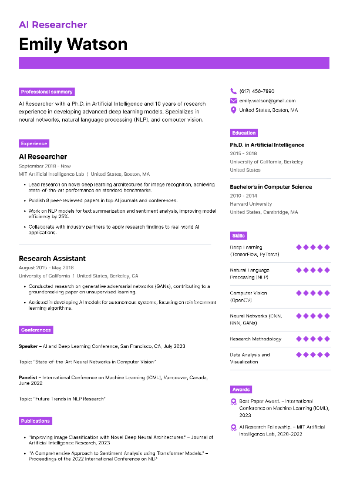
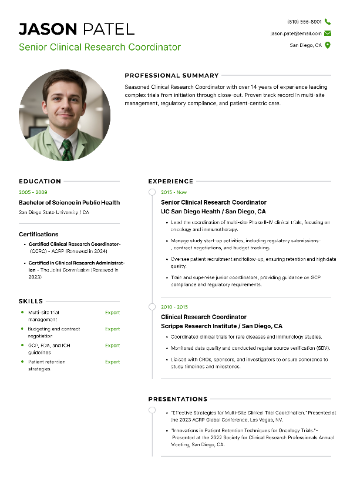
Research position resume with publications
Johnathan Reed, PhD
Email: john.reed@email.com | Phone: (555) 555-5555 | LinkedIn: linkedin.com/in/johnreed | ResearchGate: researchgate.net/profile/JohnReed
Objective
Dynamic research scientist with expertise in molecular biology seeking to contribute to innovative cancer treatment projects at Memorial Sloan Kettering Cancer Center.
Education
PhD in Molecular Biology | University of Chicago | 2020
- Dissertation: "Epigenetic Regulation in Tumor Suppression Pathways"
BSc in Biochemistry | UCLA | 2015
Experience
Postdoctoral Research Fellow
National Cancer Institute, Bethesda, MD | 2020–2025
- Created a new test to measure how well gene editing works and published it in Nature Biotechnology.
- Got $100,000 in grant money for independent projects.
- Helped graduate students learn how to do molecular biology experiments and analyze data.
- Did high-throughput sequencing tests to find mutations that cause cancer.
Research Assistant
University of Chicago | 2016–2020
- Wrote four peer-reviewed papers with other people about how proteins and DNA interact.
- Improved the reproducibility of experiments by 20% by designing and optimizing lab protocols.
- Gave a presentation on the results at the American Association for Cancer Research (AACR) Annual Meeting.
- Worked with a team of experts from different fields to look into epigenetic changes in cancer.
Skills
- CRISPR technology, RNA-seq analysis, advanced microscopy
- Grant writing and research proposal development
Publications
- Reed, J., et al. "CRISPR-induced mutations in tumor suppressor genes." Nature Biotechnology, 2023.
- Reed, J., et al. "Epigenetic markers for breast cancer prognosis." Cell Reports, 2021.
- Reed, J., et al. "Gene silencing pathways in human cells." Journal of Molecular Biology, 2020.
Awards
- AACR Young Investigator Award (2022)
- NIH Postdoctoral Fellowship Grant (2021)
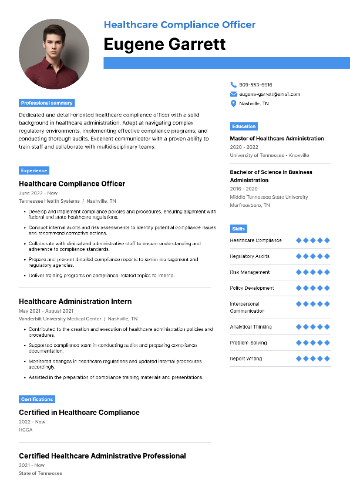
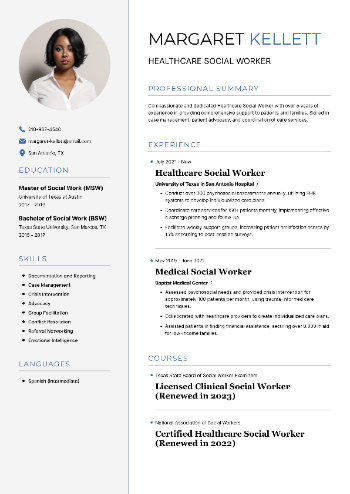
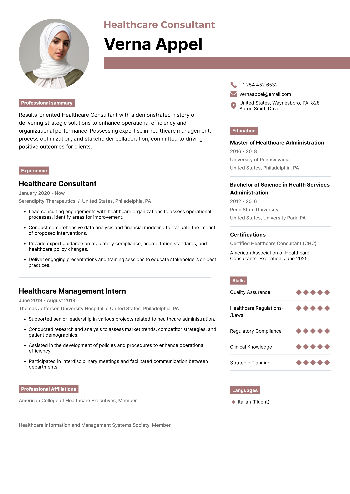
Healthcare publications section in resume
Maria Gonzalez, RN, MSN
Email: maria.gonzalez@email.com | Phone: (555) 444-3333 | LinkedIn: linkedin.com/in/mariagonzalez
Objective
Compassionate and detail-oriented nurse educator with a strong clinical research background, seeking a leadership role at Mount Sinai Health System to improve patient care outcomes.
Education
Master of Science in Nursing (MSN) | New York University | 2019
- Capstone Project: "Implementing Evidence-Based Practices in Stroke Rehabilitation"
Bachelor of Science in Nursing (BSN) | University of Texas | 2016
Experience
Clinical Nurse Specialist
Mount Sinai Hospital, New York, NY | 2019–Present
- Lead a team to design patient care protocols based on research findings, reducing readmission rates by 15%.
- Conduct workshops for 50+ nurses on evidence-based practices and patient care.
- Publish clinical findings in top-tier nursing journals and presented at conferences.
- Coordinate interdisciplinary meetings to improve care for post-stroke patients.
Staff Nurse
Texas Medical Center, Houston, TX | 2016–2019
- Delivered compassionate care to over 1,000 post-operative patients annually.
- Authored patient education materials for diabetes management and heart health.
- Participated in quality improvement initiatives that reduced patient falls by 25%.
- Trained new nurses on post-surgical care protocols and EHR documentation.
Skills
- Clinical data analysis, electronic health record systems, patient education
Publications
- Gonzalez, M., et al. "Optimizing post-stroke recovery through early intervention." Journal of Nursing Care Quality, 2024.
- Gonzalez, M., et al. "Evidence-based strategies for diabetes education." The American Journal of Nursing, 2021.
Certifications
- Certified Diabetes Educator (CDE)
- Advanced Cardiovascular Life Support (ACLS)
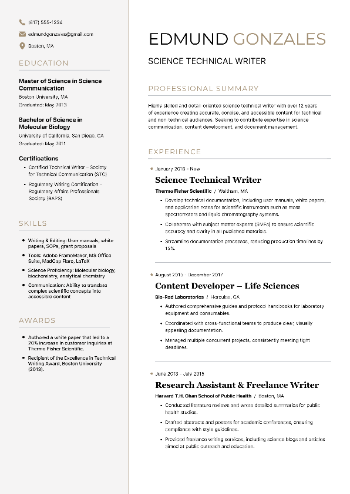
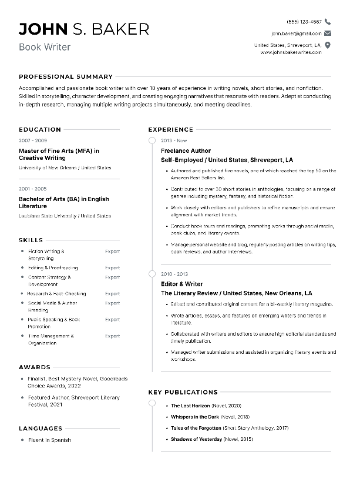
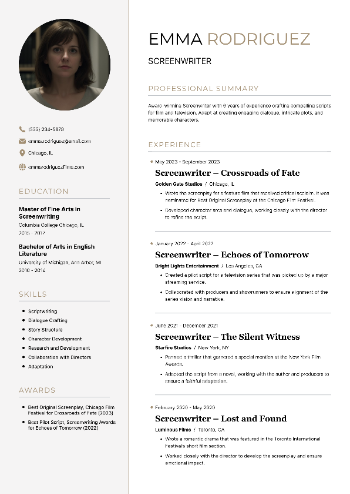
Adding publications to resume for a writer
Olivia Mitchell
Email: olivia.mitchell@email.com | Phone: (555) 222-1111 | Website: www.oliviamitchellwrites.com | Twitter: @omwrites
Objective
Creative and analytical writer with a proven track record in crafting compelling narratives and journalistic articles. Seeking to join The New York Times as a content strategist.
Education
- MA in Creative Writing | Columbia University | 2018
- BA in English Literature | University of Virginia | 2015
Experience
Freelance Writer
2018–Present
- Wrote more than 100 pieces for The Atlantic, The New Yorker, and The Huffington Post, among other places.
- Write long investigative articles that got more than 500,000 readers in total.
- Work with editors to make content for popular websites that is good for SEO.
- Do interviews with leaders in the field for long articles.
Content Editor
BlueSky Media | 2015–2018
- Edited web and print copy for tech and lifestyle brands to make sure they were interesting to readers and good for search engines.
- Supervised three junior writers, giving them feedback and advice.
- Made style guides to speed up the creation of content and keep the brand consistent.
- Managed editorial calendars to make sure that all assignments were turned in on time.
Skills
- Story development, copyediting, SEO writing, and AP Style
Publications
- Mitchell, O. "The Rise of AI in Modern Literature." The Atlantic, 2023.
- Mitchell, O. "A Writer's Guide to Surviving Freelance Burnout." Writer’s Digest, 2021.
- Mitchell, O. "Rediscovering Gothic Novels in a Digital Age." The New Yorker, 2020.
Awards
- Pushcart Prize Nominee (2022)
- Best Emerging Writer, National Writing Awards (2020)
Conclusion
Knowing how to list your publications on a resume can elevate your profile, providing potential employers or collaborators with a glimpse into your knowledge and expertise.
By tailoring how you present these works to fit the job or opportunity at hand, you demonstrate both attention to detail and a strong sense of professional branding.
With the tips in this guide, you’ll be better equipped to showcase your accomplishments and leave a lasting impression.
Create your professional Resume in 10 minutes for FREE
Build My Resume