 by
by When crafting your resume, including the right dentist skills sections is crucial for standing out to hiring managers.
Whether you're a recent graduate or an experienced professional, showcasing your technical and interpersonal abilities is essential to highlight your expertise and show why would you be a good fit for this position.
In this article, we'll explore the most important dental skills for your resume, ensuring you make a great first impression.
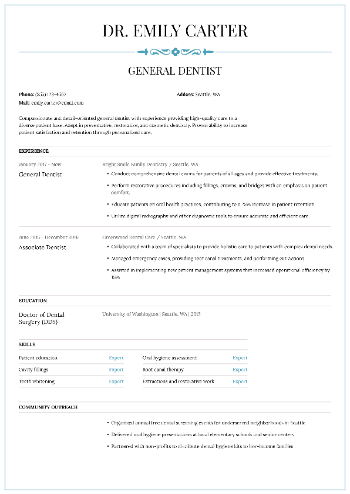
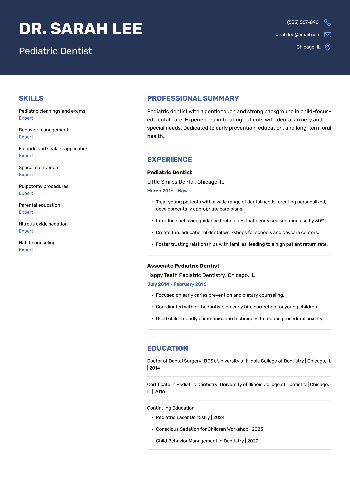
Why do dental skills matter for your resume?
Dentist skills—whether technical or interpersonal—form the backbone of your resume. These qualifications help you stand out to HRs and give them a clear picture of what you can bring to the table.
But what makes these competencies so essential?
1. Demonstrating Your Expertise
Skills on resume aren’t just bullet points—they're evidence of your professional history. By highlighting your clinical competencies, employers can easily evaluate whether you can manage key procedures like cleanings, fillings, and extractions.
Recruiters seek specialists who can handle common tasks while also being open to evolving industry practices.
2. Making a Strong Impression
Your application is usually the first opportunity to make an impact. The skills you need to be a dentist serve as a quick way to demonstrate that you’re the right person for the role and why you should be hired.
Think of it as the "opening line"—if you match your capabilities to the job, you immediately draw attention.
3. Tailoring to Job Requirements
Every practice has distinct needs depending on the patient demographic and the services they offer. It’s essential to match the exact demands of the position. For instance:
- A pediatric dentist might want to highlight their capacity to work with children and ease their anxiety.
- An orthodontist would focus on their knowledge of specialized treatments like braces and aligners.
4. Showcasing Patient Relations
This sphere involves far more than clinical skill requirements for a dentist—interacting with people is key. Clear communication, empathy, and problem-solving are just as important.
Employers are looking for someone who can:
- Build trust and rapport with patients.
- Explain complex procedures in an understandable way.
- Stay composed in fast-paced or stressful situations.
Create your professional Resume in 10 minutes for FREE
Build My Resume
What skills are required to be a dentist?
- Hard skills for a dentist
These specialized abilities demonstrate your technical competence and hard skills and show you’re equipped to handle the demands of the role. They are concrete and measurable, often gained through education, certifications, and hands-on experience.
1. Oral Surgery Expertise
This is a core aspect of dentistry that involves the diagnosis and surgical treatment of diseases, injuries, and defects affecting the mouth, teeth, and jaw.
Whether you perform routine tooth extractions or more complex procedures such as wisdom tooth removal or jaw surgery, highlighting it is crucial.
Skilled in performing extractions, implant placements, and corrective surgeries, including wisdom tooth extractions and bone grafting procedures.
- Learning method:
- Hands-on training, advanced courses, and mentorship under experienced specialists.
Roles that benefit:
- Oral Surgeons
- General Dentists with surgical experience
- Dental Residents
2. Prosthodontics
This specialized field focuses on restoring and replacing damaged or missing teeth, often through crowns, bridges, dentures, or implants. Precision and an understanding of materials are key to creating functional and aesthetically pleasing restorations.
Expertise in designing and placing crowns, bridges, and dentures with a focus on optimal fit and aesthetics.
- Learning method:
- Postgraduate studies, hands-on training with dental labs, and continuous research on new materials and techniques.
Roles that benefit:
- Prosthodontists
- General Dentists
- Dental Lab Technicians
3. Root Canal Treatment (Endodontics)
Root canal therapy saves severely decayed or infected teeth, helping patients avoid extractions. The ability to perform these treatments effectively ensures the preservation of natural teeth and prevents further complications.
Skilled in performing root canal treatments using state-of-the-art equipment, ensuring patient comfort and long-term tooth preservation.
- Learning method:
- Formal education in endodontics, ongoing practice with various cases, and exposure to advanced diagnostic tools and treatment procedures.
Roles that benefit:
- Endodontists
- General Dentists
- Dental Residents
4. Dental Radiography
Using diagnostic imaging such as X-rays is essential for detecting issues like cavities, infections, or bone loss that aren't visible during a regular exam. Proficiency in interpreting these images helps create accurate treatment plans.
Expert in capturing and interpreting digital X-rays, like bitewing, panoramic, and periapical images, to assess oral health.
- Learning method:
- Courses in radiography techniques, continuous practice with imaging devices, and staying up-to-date on advancements in digital radiography.
Roles that benefit:
- General Dentists
- Radiologists in Dentistry
- Dental Hygienists
5. Periodontics
This specialty focuses on managing gum health and treating periodontal disease. It also includes implant placement and maintenance, which are critical for preserving oral function and hygiene.
Expertise in performing scaling and root planing procedures, periodontal surgeries, and managing implant placements.
- Learning method:
- Specialized training, attending advanced courses, and working alongside seasoned periodontists for hands-on experience.
Roles that benefit:
- Periodontists
- General Dentists with periodontal experience
- Dental Hygienists
6. Pediatric Dentistry
Caring for the health of children requires a distinct approach due to the changes over the years. Understanding how to engage young patients with patience and appropriate methods is crucial.
Proficient in conducting exams, preventive treatments, and managing childhood dental issues like cavities and teething problems.
- Learning method:
- Training in pediatric care, working with specialists, and focusing on child psychology for better patient communication.
Roles that benefit:
- Pediatric Dentists
- General Dentists
- Pediatric Dental Hygienists
7. Cosmetic Dentistry
Improving the appearance of a patient's smile requires both technical skills and a strong aesthetic sense. Procedures like whitening, veneers, and bonding play a significant role in enhancing a patient's self-esteem and smile.
Skilled in the application of veneers, tooth whitening procedures, and other smile-enhancing treatments to improve patient aesthetics.
- Learning method:
- Training in cosmetic courses, hands-on experience with advanced materials, and learning aesthetic principles.
Roles that benefit:
- Cosmetic Dentists
- General Dentists with a focus on aesthetics
- Dental Assistants
8. Orthodontics
This specialty corrects misalignments of the teeth and jaw, often with braces or clear aligners. Understanding how to create treatment plans and effectively monitor progress is essential for achieving optimal results.
Experience in assessing and treating malocclusions, creating treatment plans for braces, and using clear aligners for teeth realignment.
- Learning method:
- Certification and specialization in orthodontics, including hands-on experience with different appliances, techniques and computer skills.
Roles that benefit:
- Orthodontists
- General Dentists with orthodontic training
- Dental Technicians
9. Dental Implantology
Implants are a common and effective solution for replacing missing teeth. Proficiency in the entire process, from placement to post-operative care, is key to ensuring the best outcomes for patients.
Skilled in the placement of single and multi-tooth implants, including post-operative care and management to ensure optimal patient outcomes.
- Learning method:
- Training through implant programs, clinical practice under experienced doctors, and continuous study of materials and techniques.
Roles that benefit:
- Implant Specialists
- General Dentists with implant training
- Surgical Assistants
- Soft skills needed for a dentist
Effective Communication
Dentists must engage clearly with patients, colleagues, and other medical professionals, explaining treatments, addressing concerns, and conveying information in an understandable manner.Compassion
Being sensitive to the emotional and physical discomfort helps to establish trust, reduce anxiety, and create a more relaxed experience.Critical Thinking Dentist Skill Requirements
Specialists face complex situations that require rapid decision-making. The ability to evaluate various options and make informed judgments is vital for effective care.Precision
A sharp focus on accuracy is necessary to ensure procedures are done correctly, minimizing risks and achieving optimal results.Patience
In a dental setting, remaining composed and calm, especially when handling anxious or time-consuming cases, is important for providing a smooth experience for everyone involved.Collaboration
Working seamlessly with a team of hygienists, assistants, and receptionists helps maintain efficient workflows and improves the overall expertise.Flexibility
This field is constantly evolving, with new tools, methods, and challenges. You need to remain open to learning and adjusting to changes in techniques and patient needs.Organizational Dentistry Skills for Resume
Balancing a packed schedule, managing records, and keeping track of various treatment plans require effective time management and a methodical approach.Leadership
When overseeing a team, a dentist needs to guide and inspire staff, for proper coordination and fostering a positive work environment that reflects well on the practice.Composure Under Pressure
Whether managing a difficult patient or handling an emergency situation, maintaining calmness and making sound decisions is essential for providing effective care.
Example of dentist skills for resume
Dr. Isabella Carter
isabella.carter@email.com | (555) 987-6543 | San Francisco, CASummary
Experienced and compassionate dentist with expertise in general and cosmetic dentistry. Skilled in a wide range of dental procedures, from routine cleanings to advanced restorative treatments, with a commitment to improving patient oral health and providing personalized care. Known for building strong patient relationships and promoting preventive dental care.
Skills
- Comprehensive exams: Skilled in diagnosing and creating personalized treatment plans.
- Restorative dentistry: Expertise in fillings, crowns, bridges, and dentures.
- Oral surgery: Experience with extractions and soft tissue surgeries.
- Anesthesia administration: Proficient in local anesthesia and pain management.
- Pediatric care: Specialized in treating children and managing dental anxiety.
- Orthodontics: Knowledge of basic braces and clear aligners.
- Patient education: Focused on preventative care and oral hygiene guidance.
- Diagnostic imaging: Proficient in X-ray and CT scan interpretation.
- Office management: Strong skills in scheduling, record-keeping, and insurance coordination.
Experience
General Dentist
Oceanview Family Dentistry | San Francisco, CA
June 2016 – Present
- Conduct comprehensive dental exams to assess and diagnose conditions, creating individualized treatment plans based on patient needs.
- Perform restorative procedures including fillings, crowns, bridges, and dentures with a focus on both function and aesthetics.
- Administer local anesthesia and manage patient comfort throughout procedures, ensuring a pain-free experience.
- Collaborate with dental hygienists and assistants to ensure smooth workflow and high-quality care.
- Educate patients on proper oral hygiene and the importance of preventive care to maintain long-term oral health.
- Manage office tasks, including scheduling, patient record keeping, and billing with various insurance companies.
Associate Dentist
Lakeside Dental Group | Sacramento, CA
August 2012 – May 2016
- Provided general dental care including exams, fillings, root canals, and extractions, serving a diverse patient base.
- Worked closely with the dental team to streamline patient flow and improve clinic efficiency.
- Developed treatment plans for patients based on diagnoses, providing clear explanations and addressing any concerns.
- Trained and mentored dental assistants and hygienists to ensure the highest standards of care were met.
- Introduced preventive care programs, helping to reduce patient visits for emergency treatments.
Education
Doctor of Dental Surgery (DDS)
University of Southern California | Los Angeles, CA
Graduated: May 2012Certifications
- California Dental License – June 2013
- Advanced Cardiac Life Support (ACLS) – October 2017
- Pediatric Dentistry Certification – May 2016
Additional Information
- Fluent in English and Spanish.
- Active member of the California Dental Association.
- Regular volunteer with the "Smiles for All" outreach program, providing free dental care to underserved communities.
Conclusion
A strong resume not only reflects your qualifications but also showcases your ability to excel in a dental practice.
By including the key dentist skills for resume, such as technical expertise and communication, you increase your chances of landing the position you desire.
Tailor your document to the specific job you're applying for and remember, employers are looking for candidates who demonstrate both proficiency and a compassionate attitude toward patient care.
Create your professional Resume in 10 minutes for FREE
Build My Resume