 by
by Nailing a good cover letter for an internship isn’t about ticking a box - it’s your shot at grabbing someone’s attention and opening the door to real career opportunities. This is where you get to introduce yourself, show off your skills and experiences, and, let your excitement shine through.
Here, I’ll walk you through everything you need to make your internship cover letter stand out. You’ll find step-by-step advice, along with examples and templates that’ll help you hook the hiring team right from the start.
Understanding Internships
- What is an internship?
- Think of it as a short-term gig, usually for students or recent grads, where you get to put what you’ve learned in class to the test in the real world.
Internships are all about getting a taste of what a job in your field actually feels like. They can last anywhere from a few weeks to months. Sometimes you get paid, sometimes you don’t - it depends on the company, the industry, and where you are.
When you’re applying for an internship, you’ll usually need:
- A professional resume, even if it’s your first time.
- A cover letter (that’s what we’re discussing here).
- One or more letters of recommendation from teachers or mentors.
- A portfolio with your best projects, coursework, or anything else that shows what you can do.
Looking for a summer internship as a sophomore? Don’t worry if you don’t have much expertise yet. You can still build a student resume by highlighting your volunteering, activities, and anything else that matters.
Even if the cover letter isn’t required, don’t skip it. A strong paper can be the difference between getting noticed and getting lost in the pile. It lets you go beyond your resume and actually tell your story: who you are, what drives you, and why you’re the right pick.
Types of Internships
Type Description Paid Intern receives monetary compensation. Unpaid No paycheck here, but you do get experience and new skills. Work Research Dive into science tied to the company’s projects or big goals. Graduation Designed for grads preparing their thesis or dissertation — usually remote. Virtual The whole internship happens online remotely, so you can participate from pretty much anywhere. Apprenticeship Structured program. You learn a specific trade or talent directly from seasoned pros. Fellowship Competitive and usually for postgrads or gurus — you get to work on research or development under expert mentors. Academic Credit You do it for course, meeting certain requirements and checked by a faculty member. Externship Think of this as job shadowing — it’s short-term and lets you observe the advantages to see what a certain sphere is really like. Did you know these people started their careers as interns?
- Mary Barra (General Motors CEO). She broke new ground as GM’s first female CEO, but before that, she started out as an intern on the factory floor at just 18.
- Steven Spielberg (Film director). Spielberg’s Hollywood journey kicked off with a full-time, unpaid internship at Universal Studios.
- Ursula Burns (Former Xerox CEO). Began as an intern, too. Later, she made history as the first African American woman to run a Fortune 500 company.
- Elon Musk (Tesla Motors CEO). Didn’t stop at one internship — he was at the Bank of Nova Scotia, Microsoft Canada, Rocket Science Games, and Pinnacle Research.
- Sheryl Sandberg (Former COO of Facebook). Her career began with a management internship at the World Bank. She went on to help lead one of the world’s biggest social media giants.
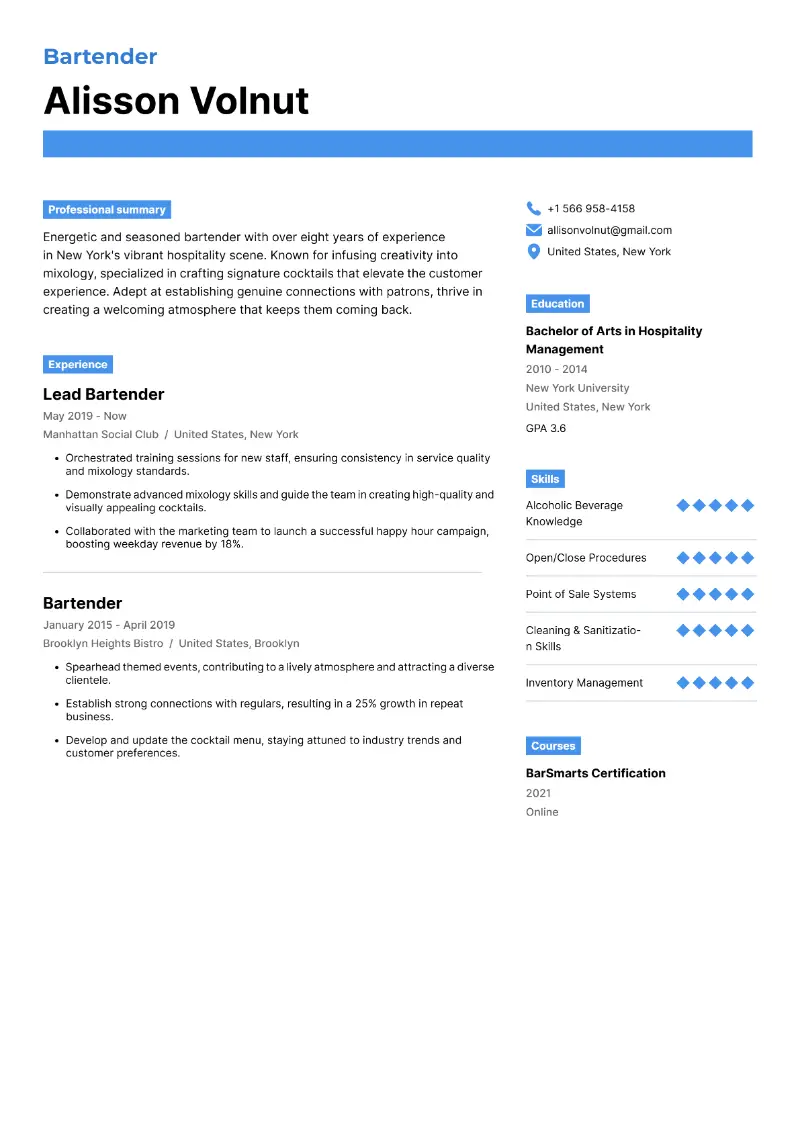
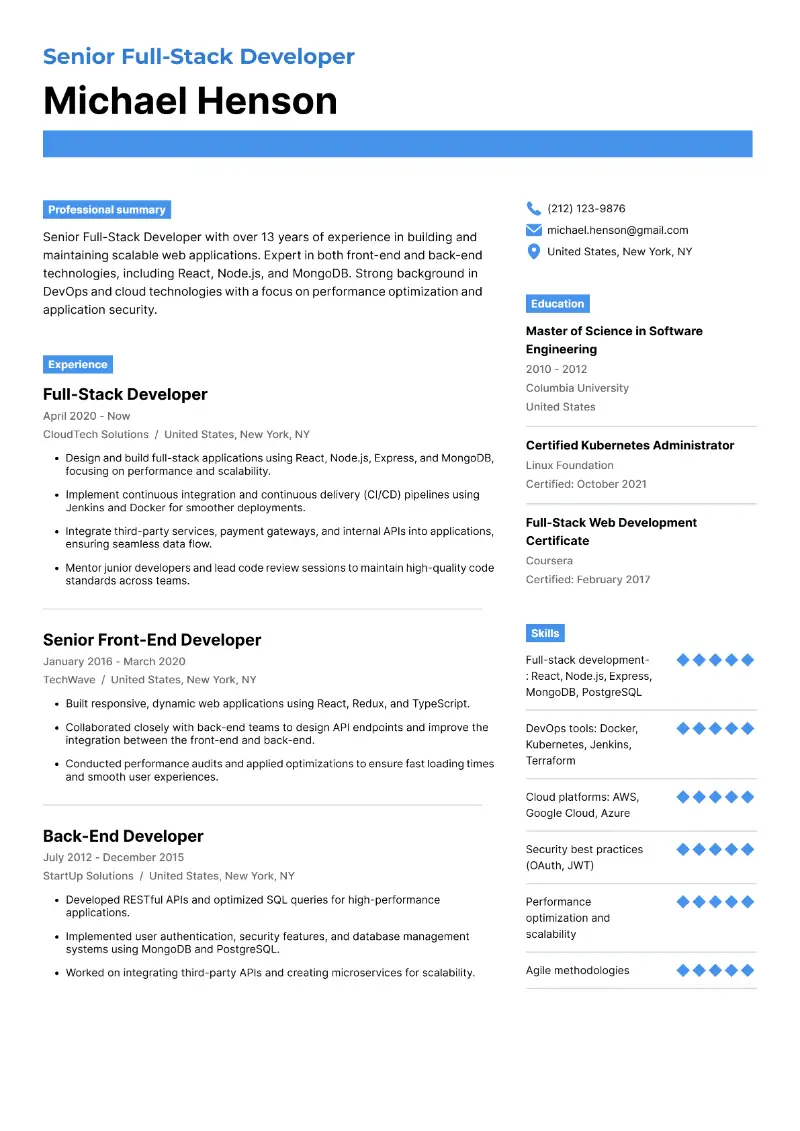
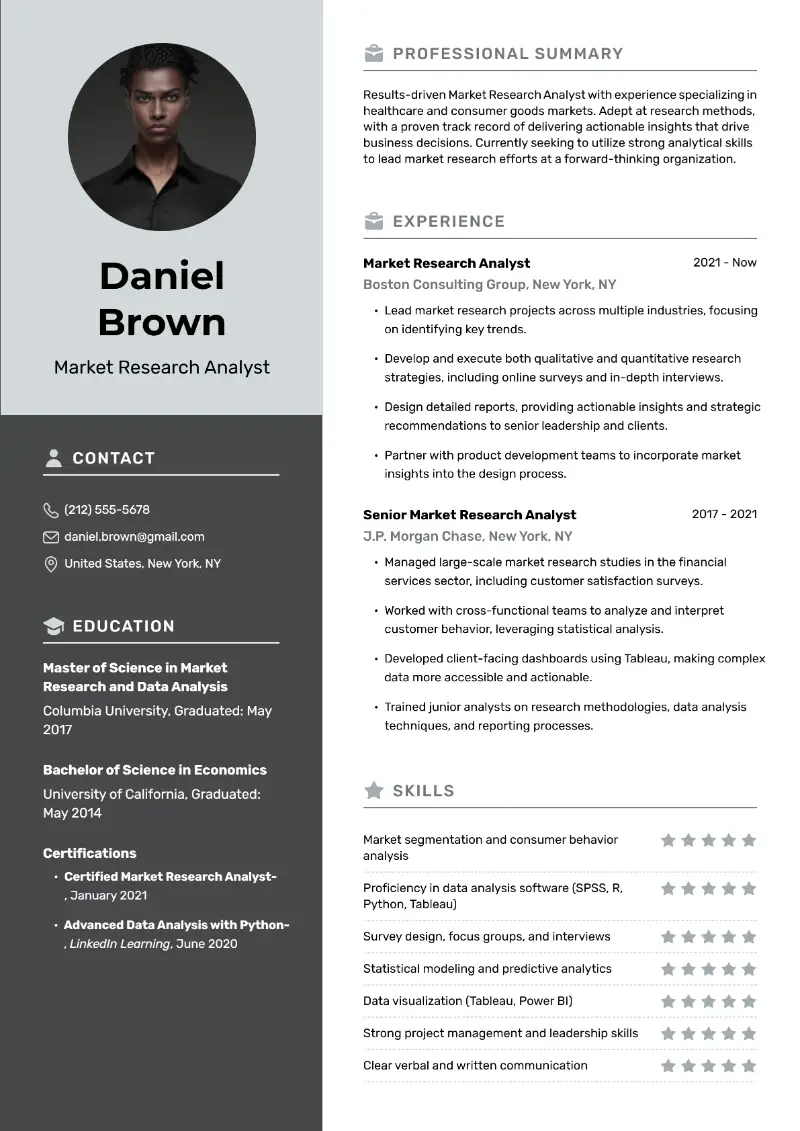
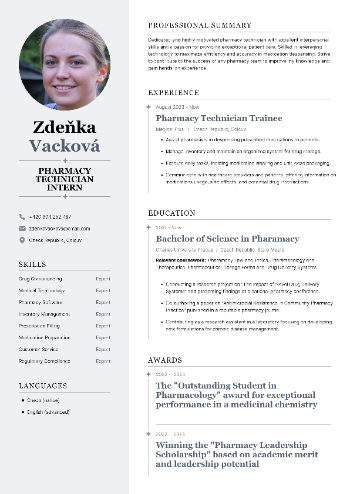
Intern's resume examples:
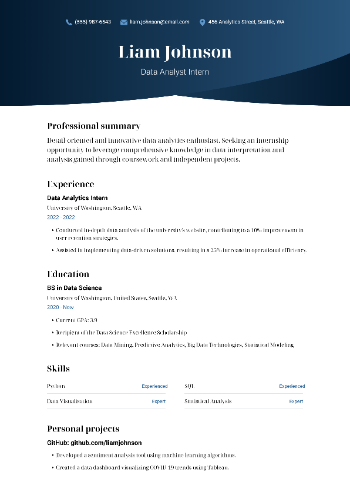
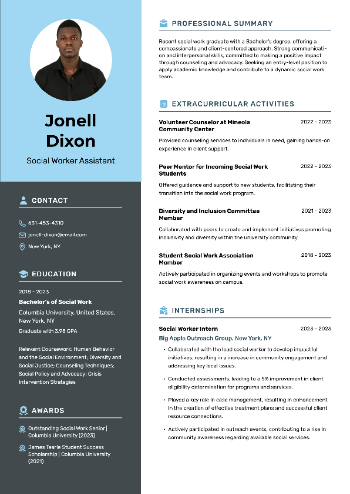
Create your professional Resume in 10 minutes for FREE
Build My Resume
Why Are Internships Important: 10 Reasons
- Real-world experience. Internships throw you straight into the action. Sure, classes teach you the basics, but nothing compares to using what you’ve learned out in the real world. You see how things behave, make mistakes, and pick up lessons you can’t get from textbooks.
- Skill development. This is where you sharpen your edge. Whether it’s coding, crunching numbers, or finding out how to act with people, Practicums push you to step up. You get better at what you do and discover new capacities along the way.
- Networking. Who you know matters, and externships help you build those connections. You meet mentors, swap ideas with coworkers, and get your foot in the door. Sometimes, it’s these relationships that open up the best opportunities.
- Resume enhancement. Let’s be real - employers want experience. An internship on your resume proves you’ve put in the effort and you’re serious about your field. It reveals you’re not only book-smart; you’re ready to contribute from day one.
- Personal growth. Apprenticeships don’t make you a better staffer, they help you grow as a person. It’s about adapting, learning fast, and bouncing back when things don’t go as planned. All those challenges? They make you tougher and more confident.
- Exploration and clarification. Not sure what you want to do? Internships are perfect for that. You get to test out different roles, see what clicks, and maybe even surprise yourself by finding a new passion.
- Confidence building. There’s nothing like finishing a training and looking back at what you accomplished. It’s a real boost to know you handled the challenges and made a difference. That confidence sticks with you, especially when you’re job hunting.
- Competitive advantage. In a crowded market, having traineeship can tip the scales. Bosses notice when you’ve already been in the trenches and picked up practical know-how. It’s that extra stage that helps you stand out.
- Job offers. Here’s the kicker: do a great job, and you might land an offer right from your study. Even if you don’t, that background makes it way easier to break into the industry later.
- Skill validation. These are where you prove what you can do. You get to display to employers - and yourself - that your abilities hold up when it counts.
Technology companies really value this kind of expertise. For example, 80.2% of Facebook’s staff did internships, and so did 78.3% of Google’s employees. IBM? 70.1%. So, if you want to get into tech, these practices aren’t just helpful - they’re almost expected. (Chegg)
All in all, the lessons and connections you pick up can launch your career and set you up for a future you’ll be excited about.
How to Write a Cover Letter for an Internship
1. Start with a Clear Expression of Intent
When you sit down to write your cover letter, begin by putting your contact info at the top, along with the details for the person you’re addressing to—maybe it’s a hiring manager or the department head. If you know their name, utilize it. It’s always better than a generic greeting.
Jump right in by introducing yourself. Say your name, what year you’re in, and where you study. Let them know exactly which internship you want. Don’t be shy, present some real excitement about the opportunity.
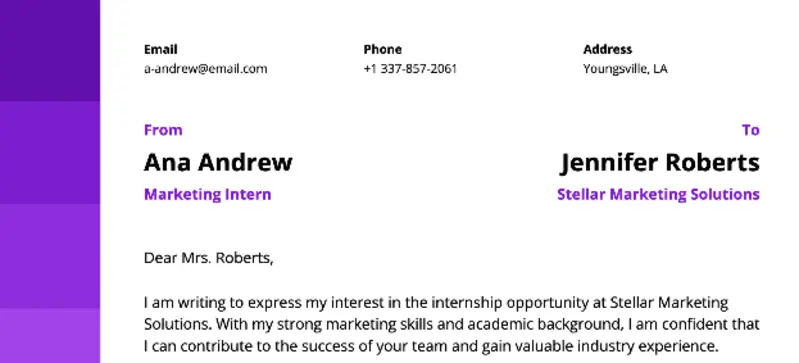
Taking this approach indicates you’ve tried to compose a paper just for them. You’re not blasting out the same note to every company on your list. And if you are applying to a few different places, make sure you tweak this opening for each one. Details matter.
2. The Power of Relevant Keywords
Incorporating the right keywords in your cover letter really matters, especially since a lot of organizations use Applicant Tracking Software (ATS) to filter through all those materials.
So, look at the job description and poke around the firm’s website. Search for the words they utilize to talk about what they want. Bring those same phrases into your letter, but make them fit your own story.
For example, if they mention about management, share a quick story or sample that proves you know how to tackle your time. That’s how you stand out.
Keywords for cover letter for internship examples:
- Adaptable
- Collaborative
- Detail-oriented
- Problem-solving
- Time management
- Communication skills
- Creativity
- Technical proficiency
- Analytical skills
- Leadership potential
- Research skills
- Proactive
- Multitasking
- Project management
- Critical thinking
- Passionate
- Motivated
- Eager to learn
- Ambitious
- Diligent
- Resourceful
- Driven
- Committed
- Hardworking
- Curious
- Goal-oriented
- Relevant coursework
- Hands-on experience
- Practical application
- Team collaboration
- Problem-solving techniques
- Client-focused
- Strategic thinking
- Market research
- Data analysis
- Creative problem-solving
- Competitive analysis
- Statistical evaluation
3. Spotlight Your Relevant Experience
When your professional expertise is limited, coursework, projects, extracurricular activities, or significant assignments can be invaluable to potential employers. They articulate details about the courses and other types of work you've completed that align with the job description or industry.
For example, if you are eyeing a design internship, showcase your design-related courses and any notable achievements in the field.
Explain why you believe you would be a beneficial addition to the apprenticeship. Incorporate any pertinent knowledge you may have acquired through education, research, or other experiences.
4. Emphasize Your Relevant Skills
The main body of your cover letter for internship serves as a canvas where you can vividly paint a picture of your relevant knowledge, expertise, and educational background.
Don't hesitate to showcase skills you've acquired through previous internships, part-time roles, volunteer positions, coursework, or extracurricular activities.
For instance, if you are applying for a reporting intern position, you could elaborate on your leadership skills you've developed in the role of an editor at your college newspaper.
Include examples of how your excellent communication skills have enabled you to succeed in past projects or experiences. Highlight any team-building exercises that illustrate your capacity to collaborate with others productively to finish tasks on time and within budget.
5. Connect the Dots: Why You Are the Perfect Fit
Dedicate a few lines to establish a clear link between your qualifications and the internship requirements. A meticulous job description analysis will help you identify the skills and experiences the employer seeks.
Then, seamlessly align these with your qualifications in your cover letter for internship, demonstrating how you fit the employer's needs.
It's important to show how motivated you are about the role and display a strong desire to further your knowledge of it.
6. Articulate Your Internship Goals
Internship programs are typically designed to provide students and young professionals with industry insights, skill development, and valuable networking opportunities.
Besides explaining how you can contribute to the company, articulate what you hope to achieve and learn during the practicum. State why this particular internship interests you and how it fits into your career aspirations.
Additionally, highlight why you want to work at this organization and not any other place. Tell how this experience will help you in your career building.
7. Provide Closing Remarks
Conclude your cover letter for internship by thanking the employer for considering your candidacy and expressing your desire to hear back. Include contact information so they can get in touch with you if they have further questions or would like to set up an interview.
8. The Final Polish: Proofreading and Editing
After completing your internship cover letter, dedicate time to review and edit the application letter. Scrutinize it for spelling, punctuation, and grammar errors.
Seek feedback from trusted friends or family members whenever possible to gain a fresh perspective. Alternatively, utilize online grammar and spelling checkers to ensure the utmost accuracy.
Create your professional Cover letter in 10 minutes for FREE
Build My Cover LetterCover Letter for an Internship Examples
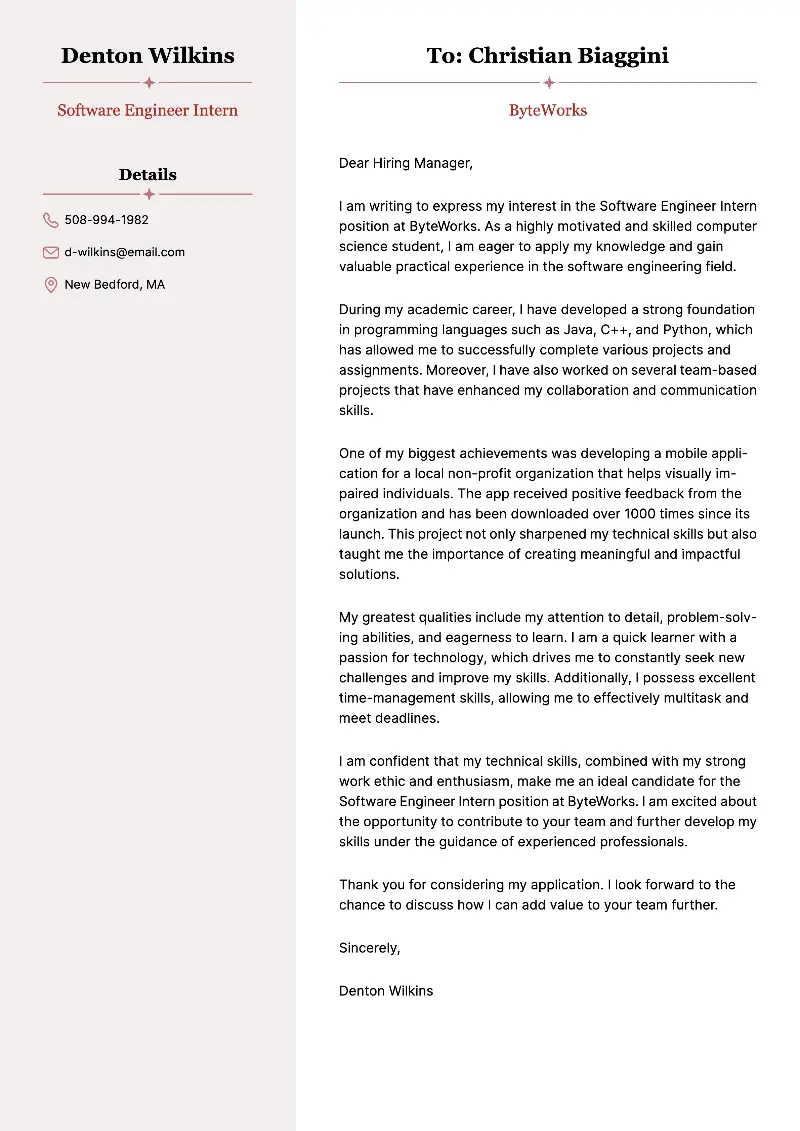
Sample Cover Letter for an Internship as a Software Engineer
Writing a Cover Letter for an Internship as a Mobile App Designer
Camilla Hernandez940-891-8884 | c-hernandez@email.com
Denton, TX
March 25, 2024
Mr. Michael Eren
Imaginique Studio
4037 Freed Drive | Denton, TX
Dear Mr. Eren,
I’m excited to send along my application for the Summer Design internship at Imaginique Studio. My time at the University of North Texas and my hands-on work in the community have shaped my skills. I’m eager to bring what I’ve learned to your team.
For the past three years, I’ve dove deep into design at UNT — especially classes like Principles of User Experience and Mobile Application Design. Thanks to that, I know my way around user journey maps. I’m comfortable with wireframing, and I’ve built software for all sorts of mobile platforms. I like to stay on the edge of new tech, and learning never really stops for me.
Outside of school, I recently volunteered with a local non-profit, working closely with their web team. We overhauled and relaunched an app that helps people make community donations. After our update, donations jumped by 10%. That project really showed me how smart design can make a difference.
I take pride in my attention to detail and my drive to add creativity to everything I do. My graphic design skills are solid, and I always try to bring fresh ideas to the table. I’m ready to help Imaginique Studio stand out in a crowded field.
Honestly, I’m thrilled at the thought of joining your internship program. It’s a chance to dive into real-world tech, push my skills further, and learn from your team. I can’t wait to see where this journey takes us.
Thanks for considering my application. I’m looking forward to talking more about how I can help Imaginique Studio keep pushing boundaries. I’m ready whenever you are.
Sincerely,Camilla Hernandez
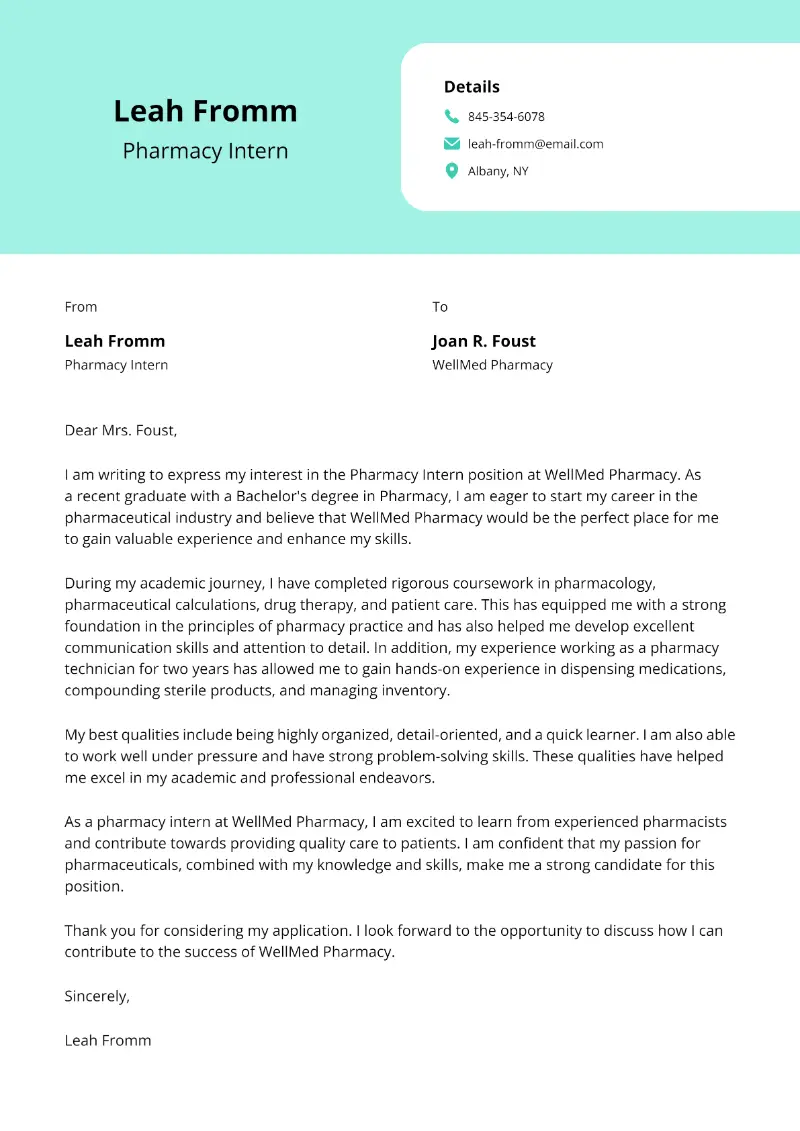
Sample Cover Letter for an Internship as a Pharmacist
Internship Cover Letter Template
[Your Name][Your Address]
[City, State, Zip Code]
[Your Email Address]
[Your Phone Number]
[Date]
[Employer's Name]
[Company Name]
[Company Address]
[City, State, Zip Code]
Dear [Employer's Name],
I am writing to express my interest in the [specific internship position] advertised on [where you found the job posting]. I am a [Your Current Education Level] student majoring in [Your Major/Area of Study] at [Your University/College]. I am eager to apply my skills and passion for [relevant skills or interests] to contribute to [Company Name].
Throughout my academic career, I have developed a strong foundation in [relevant skills or coursework]. This I believe aligns well with the requirements of the internship position. Additionally, my involvement in [relevant extracurricular activities or projects] has allowed me to further hone my [specific skill or quality] skills. I am excited to bring them to the team at [Company Name].
I am particularly drawn to [specific aspect of the company or internship] at [Company Name]. I want to learn from and contribute to the innovative work being done in [specific area or department]. I am confident that my [relevant skills or experiences] make me a strong candidate for this internship opportunity.
Attached is my resume, which provides additional details about my academic and extracurricular experiences. I am available to discuss how my background, skills, and enthusiasm for [Company Name] mission make me a great fit for this internship position.
Thank you for considering my application. I am looking forward to the possibility of contributing to [Company Name] and am excited about the opportunity to learn from your team. I am available for an interview at your earliest convenience. You can reach me at [Your Phone Number] or via email at [Your Email Address].
Thank you for your time and consideration.
Sincerely,[Your Name]
FAQ
Writing a cover letter for internship as a student might be intimidating, yet it doesn't have to be. Here are some answers to frequently asked questions about an intern's cover letter writing.
- How long should a internship cover letter be?
- Keep it short — 250 to 400 words tops, and stick to one page. That’s usually four to six paragraphs. Start with a quick intro, talk about your key experiences and skills, explain why you’re into this role and company, then wrap it up with a strong closing. Stay focused, highlight what matters most, and show how you fit the job.
- Should I use bullet points in my cover letter for internship?
- Skip the bullet points. Cover letters work best as smooth, flowing stories, not lists. Bullets make it feel more like a resume and break up your voice. Stick to paragraphs so you sound professional and keep your draft engaging.
- Is it acceptable to use slang or jokes in my application letter?
- Don’t go there. Jokes and slang just don’t land well in a cover letter — what’s funny to you might fall flat (or worse) with a recruiter. Stay professional and keep the center on why you’re the right pick.
- Should I explain why I'm keen on this particular company or role?
- Definitely. Display to them you’ve done your homework. Talk about what draws you to their firm or this internship specifically. Tell them how your skills and expertise line up with what they need — it reveals you’re genuinely interested, not just sending out generic applications.
- Is there any additional information I should include?
- If you’ve got something that helps you stand out — an award, a cool hobby, something unique about you — add it to your closing. Just keep it relevant and make sure it adds to the story you’re telling.
- Should I mention my GPA in the cover letter?
- Only if it’s great (think 3.5 or higher) or they ask for it. Otherwise, focus on what you’ve done and what you can bring to the table. Real-life achievements usually speak louder than numbers.
- Is it okay to mention salary expectations in the cover letter?
- In most cases, it's not appropriate to discuss what salary you want in an internship cover letter. The primary concern should be on expressing your qualifications, enthusiasm for the position, and alignment with the company's goals. Salary discussions typically occur during later stages of the hiring process, such as interviews or negotiations.
- Should I include a cover letter if the application doesn't require one?
- Writing a cover letter, even when not explicitly requested, can enhance your profile. It provides an opportunity to showcase your initiative and the desire to go above the expected. A well-crafted cover letter for internship can potentially set you apart from other applicants.
Create your professional Cover letter in 10 minutes for FREE
Build My Cover LetterConclusion
Follow the steps outlined in this article and use the provided examples as a guide. With their help, you can create a compelling internship cover letter highlighting your qualifications and conveying your genuine enthusiasm for the opportunity.
Remember that a well-crafted cover letter can be the bridge to securing an interview and, ultimately, landing the internship of your dreams.